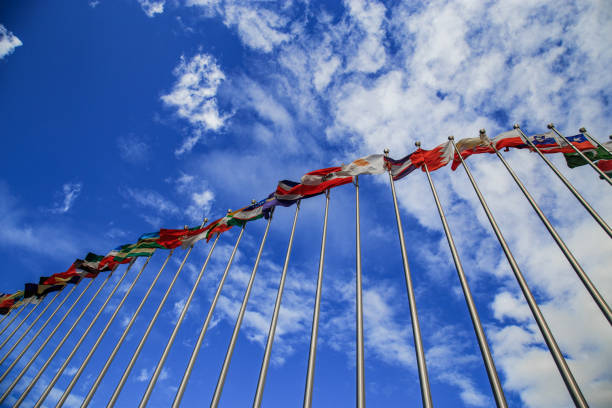
A parent watching an international judo final may notice the same flags again and again. Japan. France. South Korea. Georgia. Brazil. The question is not only who has the strongest athlete this year. It is why some countries keep producing athletes who look ready for the biggest days.
For club owners, coaches and buyers of Judo mats, that question has a practical side. Strong judo nations do not succeed because of one star. They build systems where young players can learn, compete, lose, recover and return to the mat for years. That slow cycle is where medals often begin.
Japan
Japan has the deepest claim because judo began there. Children can meet the sport through school, local clubs and family tradition. That gives the country a wide base before talent selection even begins.
The Japanese style often values clean technique and small details. A throw is not only about force. It is about timing, posture and control. Young players learn to repeat movements until they feel natural. This long technical memory gives Japan a steady edge.
France
France shows what happens when a country treats judo as a national sport, not a minor activity. It has huge club numbers, famous champions and strong public interest. A child can join a local club without needing to dream of the Olympics on day one.
That matters because depth creates competition. A promising teenager in France is not alone. They are tested often by other strong players. The system can also keep people in the sport because clubs serve beginners, hobby players and elite athletes. This makes the ladder longer and stronger.
South Korea
South Korea often produces judoka who fight with speed, grip pressure and sharp attacks. The country’s success is linked to serious school and university sport. Talented athletes can pass through a clear route where training becomes more demanding at each stage.
The pressure can be intense, and that may not suit everyone. Still, it creates athletes who are used to hard sessions and hard selection. By the time they reach the world stage, the pace does not feel strange.
Georgia
Georgia’s strength comes from a fighting culture where grappling carries real pride. The country has its own wrestling traditions, and that background seems to feed well into judo. Georgian athletes often look comfortable in close contact and sudden changes of balance.
They can also bring a fearless style. A Georgian judoka may attack from positions that look risky to others. That can make them hard to read. At elite level, unusual timing can matter as much as perfect form.
Brazil
Brazil’s judo story is built on spread and persistence. The sport has strong clubs, respected coaches and a long record of Olympic medals. It also benefits from a wider combat sport culture, where young athletes may grow up around different ways of training.
Brazilian judoka often look adaptable. They can fight in tough matches, handle rough exchanges and stay dangerous late in the contest. That matters in modern judo, where one small score can decide everything.
The common thread is not one national secret. Japan has history. France has scale. South Korea has structure. Georgia has grappling culture. Brazil has breadth and resilience. Each country wins for a different reason.
This is useful for anyone running a club. Good Judo mats may be visible, but the deeper lesson is what happens on them every week. The countries that dominate usually give athletes regular practice, good coaching, enough competition and a reason to stay.
A medal table can make success look sudden. It rarely is. Behind the final throw are years of crowded clubs, long trips, careful coaching and repeated falls. So when a young player steps onto Judo mats for the first time, they are also stepping into a system. The countries that build the best systems tend to stay near the top.