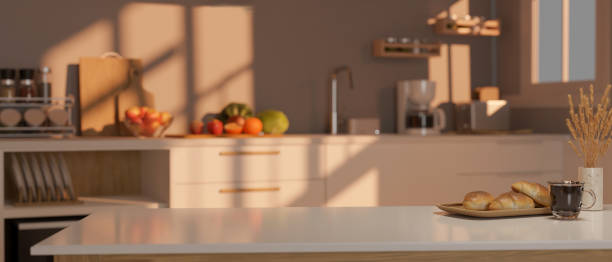
In Ireland, the kitchen has always carried more weight than its square footage suggests. It is where tea is made before a serious conversation, where guests gather before anyone reaches the sitting room, and where family routines are quietly managed around work, school, weather, and weekends. But in a high-end Irish home, the kitchen now does more than host daily life. It sets the measure for the entire property. For homeowners considering luxury kitchens, this room is not just a warm domestic centre. It is the clearest statement of quality in the house.
That may sound blunt, but property is often judged through signals. A front door gives the first one. The hallway gives another. Then the kitchen confirms whether the promise holds. In a restored Georgian home, a coastal property in Dublin, a country residence in Kildare, or a modern build outside Cork, the kitchen has to prove that design intent has been followed through properly. If it feels thin, awkward, or poorly finished, the rest of the home begins to look less certain.
Irish homes also create their own design demands. Light changes quickly. Weather pushes people indoors for long stretches. Entertaining can be informal, but expectations are still high. A kitchen may need to support quiet weekday breakfasts, Sunday lunches, late conversations, children’s routines, and guests standing comfortably with a glass in hand. It cannot simply look impressive in photographs. It has to work with the rhythm of Irish living.
This is where the old “heart of the home” phrase feels too sentimental. The better view is sharper: the kitchen is the room that exposes standards. Cabinetry alignment, stone selection, appliance integration, lighting, storage, handles, hinges, and circulation all reveal how carefully the space has been considered. A formal lounge can be styled. A guest room can be softened. A kitchen must perform.
Luxury kitchens influence how the rest of an Irish home is perceived because they carry both practical and symbolic pressure. When the joinery feels substantial, the surfaces are chosen with restraint, and the layout respects how people actually move, the wider home gains authority. The dining space feels more intentional. The living area feels better connected. Even period details nearby can feel more respected when the kitchen does not fight the architecture.
The strongest kitchens in Ireland rarely need to shout. They understand balance. A limestone floor, oak cabinetry, natural stone, muted tones, or a carefully placed island can feel more convincing than obvious display. In a period home, the best design may create contrast without arrogance. In a new build, it may add character without pretending to be old. In both cases, the room has to feel rooted rather than imported from a showroom.
There is also the matter of longevity. Irish homeowners know that trends travel quickly, but homes are lived in slowly. A fashionable finish may look current now and tired in five years. Poor lighting may flatten expensive materials. A badly scaled island may dominate the room instead of anchoring it. These are not small mistakes. They become daily irritations, and in a premium property, they are hard to excuse.
The real question is not whether the kitchen looks beautiful. It is whether it raises the standard of the whole home. Does it suit the architecture? Does it support how the owners live? Does it make hosting feel natural? Does it handle storage without visual clutter? Does it feel calm in winter light and generous on a bright summer evening?
For Irish homeowners investing seriously in their property, luxury kitchens deserve more than decorative thinking. They demand precision, durability, proportion, and a clear understanding of place. The kitchen is where compromise becomes most visible. It is where quality is tested every day. In the room by which the rest of the home will be judged, nothing should feel accidental.