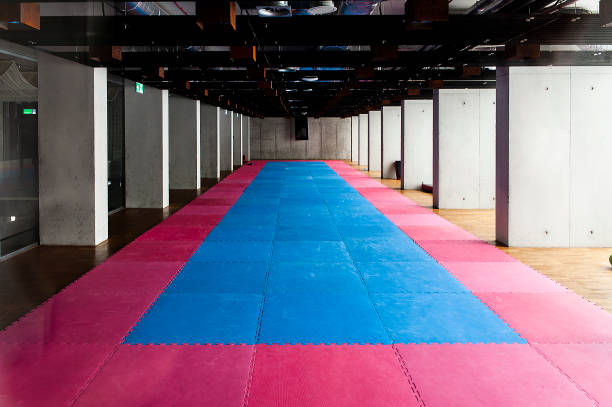
Small training spaces, community halls, and new studios often face one shared challenge: they must create a safe floor without the budget or time for permanent installations. A simple modular system solves this by allowing owners to build a training surface piece by piece. The method works because each part connects cleanly, allowing the floor to adapt to the room’s size, layout, and future changes. When done correctly, the finished surface handles impact, footwork, and movement without requiring structural work underneath.
The process usually begins with measuring the room carefully. Many new owners skip this step, only to discover gaps or overlaps later. Accurate measurements determine how many tiles will fit without forcing awkward cuts. Since the pieces interlock, clean alignment depends on predictable dimensions. Planning the layout on paper helps identify areas that need full coverage and areas that need partial coverage for equipment or storage.
Once the floor is ready, placement begins at a corner rather than the centre. Starting in the corner anchors the entire layout, preventing drift as more pieces link together. Each tile slides into the next through an interlocking edge pattern. When done slowly and evenly, the tiles form a solid sheet. Rushing this part causes misalignment that becomes harder to fix as the layout expands. A careful start usually leads to a cleaner finish.
Another important step involves testing tile density. Different activities require different firmness levels. Softer tiles help cushion light falls, while firmer tiles support strikes, balance drills, or grappling stances. Before committing to a full installation, the owner tests a few tiles by stepping, pivoting, and shifting weight across them. The right density supports the expected movement without sinking too deeply. When the tiles feel consistent across the whole batch, the floor gains a predictable texture.
Areas expected to receive more impact often need double layering. Instead of using a thicker material across the entire room, owners place a secondary layer only in zones where bodies hit the ground more frequently. This adjustment saves money while still offering adequate protection. The interlocking pattern allows the second layer to stay in place without sliding.
Another key point is boundary design. The outer edges of the floor must not form a tripping point. Many jigsaw mats include edge pieces with straight lines rather than interlocking teeth. These straight edges create a clean border where athletes enter and leave the training zone. Without edge pieces, the exposed teeth may lift slightly over time, especially in high-traffic paths.
Temperature consistency also helps maintain the floor’s quality. Interlocking surfaces expand slightly when exposed to heat and contract in cool conditions. Sudden temperature changes can cause small separations between tiles. For this reason, new owners avoid placing the floor directly under harsh sunlight or next to heating vents. A stable environment helps keep the tiles locked firmly together.
Cleaning routines matter too. Sweat, dust, and chalk accumulate on any training surface. Tiles that clean quickly reduce maintenance time and help the room stay usable throughout the day. Non-absorbent covers allow staff to wipe the surface between sessions. Because the floor breaks into smaller pieces, deep cleaning also becomes easier, as individual tiles can be moved without disturbing the entire setup.
Weight distribution becomes another consideration. Equipment such as freestanding bags, benches, or shields should sit on stable sections to prevent dents. Owners test load-bearing capacity by applying pressure and checking whether the tile retains its shape. A floor that maintains its structure supports long-term use without needing frequent replacement.
With all these steps complete, the surface becomes a reliable training platform. It adapts to the room’s needs, supports repeated movement, and provides predictable footing. Through careful planning and balanced material choices, jigsaw mats help small and large spaces create a safe, functional training area without complex installation work.