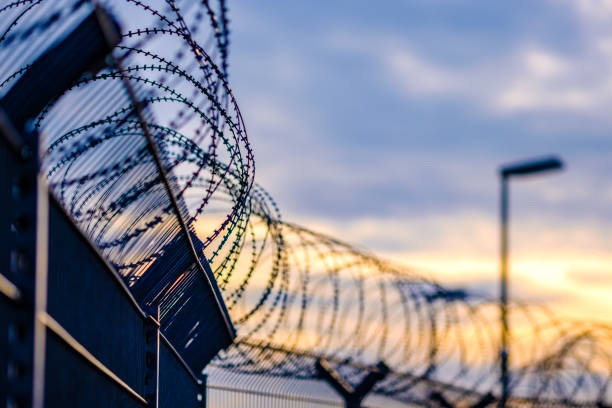
A property boundary can serve many purposes at once. It may separate public and private land, guide vehicle movement, protect stock, keep people away from hazardous areas and help staff understand where controlled space begins. A simple fence may be enough when the goal is only to mark ownership. The boundary becomes more demanding when the same line also needs to deter or delay unwanted access. Once the boundary also has to manage risk, the design needs to respond to more than appearance.
The first step is to ask what the perimeter must prevent or control. Unauthorised pedestrian access presents one challenge, while vehicle entry, theft from open storage or accidental access to dangerous equipment creates others. The answer affects material choice, height, gate design and the treatment of corners or changes in ground level. Purpose-matched security fencing is more useful than a standard product repeated around every edge.
The perimeter should also respond to the conditions around each edge. One side of a site may face a busy road, another a neighbouring business and another an open drainage reserve. Treating all three in exactly the same way can waste money in low-risk areas while overlooking vulnerabilities elsewhere. A risk-based layout considers how people could approach each section, how visible they would be and what they could reach after crossing the line.
Ground conditions matter as well. Slopes, retaining walls, culverts and uneven surfaces can create gaps beneath a barrier or reduce its effective height. Existing structures may also form convenient step-up points. A careful survey of the full perimeter is therefore more useful than designing from a flat site plan alone.
Solid boundaries can reduce views into a property, which may be valuable where stock, equipment or staff activities should not be visible from outside. However, complete visual screening can also create concealed areas close to the perimeter. In other settings, open mesh or palisade-style designs may support surveillance because movement can be seen through the boundary.
The best choice depends on what the site is trying to protect and who needs to see through the line. Cameras, lighting and patrol routes should be considered alongside the physical barrier. Well-planned security fencing should not block important sightlines or force surveillance equipment to compensate for a layout that could have been improved at the design stage.
A site rarely stays closed all day. Deliveries, shift changes, contractors and visitors create repeated openings in the perimeter. Each access point is necessary, but each one can also become a weak spot if it is poorly controlled. Gates should suit the size and frequency of traffic so staff are not encouraged to leave them open for convenience.
Temporary work can create similar problems. Building projects, service repairs or landscaping may require sections to be removed or moved. A short-term opening can become a routine shortcut if responsibility is unclear. Planning temporary controls before work begins reduces the chance that the boundary is compromised for longer than necessary.
The property may not operate in the same way five years from now. New buildings, extra parking, larger vehicles or changed neighbouring land uses can alter the role of the perimeter. Allowing for future gates, access-control upgrades or extensions can make later changes easier without dismantling large sections.
Maintenance should be part of that long-term plan too. Vegetation, corrosion, impact damage and ground movement can all affect performance. A boundary that needs specialist access for every minor repair may be harder to keep in good condition.
When security fencing has to do more than mark ownership, the design becomes a practical risk-management decision. The strongest result comes from understanding the different pressures around the property, controlling necessary openings and choosing materials that suit both security and daily operation. A well-planned boundary supports the site rather than simply surrounding it.